Schedule a Demo
Schedule a 30 minute demo with one of our specialists.


Why the Engineering Inside Your Key Management System Matters More Than You Think
Most people shopping for a key management system focus on the obvious stuff: how many keys it holds, what the software looks like, and whether it integrates with their DMS or fleet management platform. All of that matters. But there's a layer of engineering that rarely gets talked about in sales conversations, and it's often the difference between a system that works flawlessly for 15 years and one that causes headaches within the first few.
That layer is the drawer.
Specifically, how the keys are held, where the circuit boards live, whether the system can even detect that a key was taken, and whether the overall design actually enforces accountability or just creates the illusion of it.
At 1Micro, we've thought about this deeply. And when you compare our iSafe drawer design to what most competing systems are doing, the differences are hard to unsee.
The Accountability Gap Nobody Talks About
Here's a scenario that plays out in dealerships, fleet operations, and government facilities more than most people realize. An employee walks up to a competing key management system, authenticates, and the slot unlocks. But instead of pulling the key fob out through the system's checkout process, they simply slide the key off the ring and walk away. The system still shows the key as present. No one is alerted, and no audit trail is created. The key is gone, and the system has no idea.
This happens because many competing systems leave the key itself exposed. The physical key is accessible without fully removing the key tag from the slot. And if the key can be removed without triggering the checkout, the entire premise of accountability breaks down.
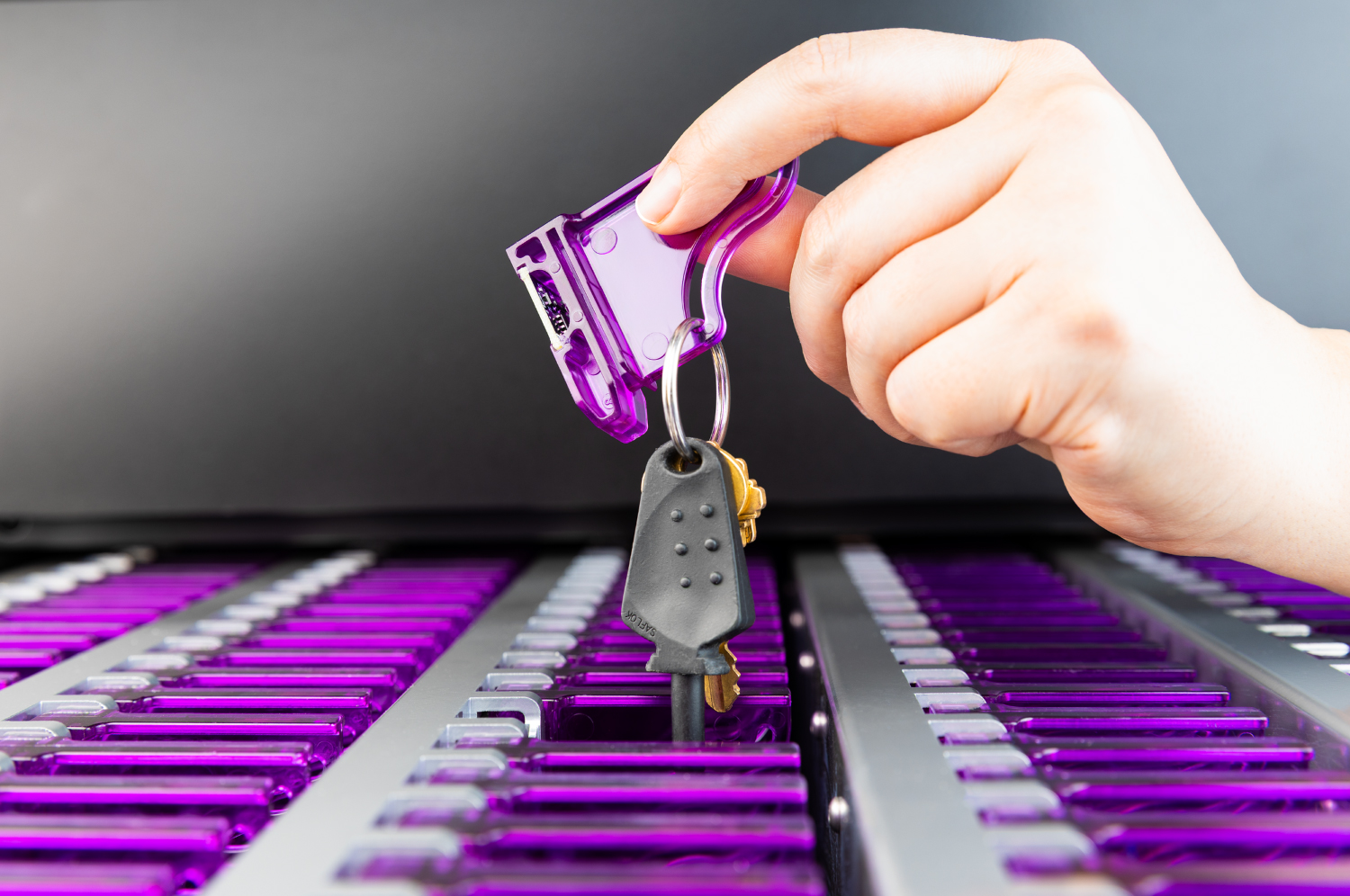
The iSafe solves this at the hardware level. In our drawer design, keys hang below the key tag. The key is fully covered and recessed within the system. To access the key, you must remove the 1Micro KeyTag completely from its slot. The moment the KeyTag is removed, the system logs that transaction, immediately creating an audit trail. There is no way to remove a key without the event being logged. Accountability isn't a policy you enforce; it's a physical reality built into the design.
That's a meaningful distinction, especially in environments where the stakes are high. A patrol vehicle, a fleet asset worth six figures, or a master key to a residential building all represent real liability. A system that can be bypassed with a simple sleight of hand isn't really a key management system. It's a suggestion box.
Some Systems Don't Even Know the Key Is Gone
This one might surprise you. Some key management systems on the market don't have any circuit boards or sensors inside the drawer at all. There is no mechanism to detect whether a key was actually removed. The drawer unlocks, the door opens, and that's where the system's awareness ends.
From there, one of two things happens. Either the user has to manually scan the key out after they've already pulled it, which adds friction to every single transaction and relies entirely on the user remembering to do it, or the system simply assumes the key was taken because the door opened. There was no confirmation and no detection, rather only an assumption logged as a fact.
In a key control system built around accountability, an assumption is not accountability. If a user opens the drawer and doesn't take the key, the system thinks it's checked out. If a user takes the key without scanning, the system has no record. Either way, your audit trail has a hole in it, and you won't know until something goes wrong.
The iSafe uses sensors at every slot. The system knows the moment a KeyTag is pulled, not because a door opened, but because the removal was physically detected and logged in real time. That's the standard accountability should be held to.
Where You Put the Circuit Board Tells You Everything
This one sounds like a minor detail until you've seen what happens when it goes wrong.
In many competing key management systems, the circuit boards are positioned at the bottom of the drawer. On paper, that might seem fine. In practice, it creates two serious failure points.
First, keys are heavy, and they move. Every time a key fob is dropped back into a slot carelessly, or a drawer is opened and closed quickly, keys shift and settle at the bottom of the drawer. Over time, that physical contact with sensitive electronics causes wear, connection issues, and eventually failures. It's not a matter of if, but a matter of when.
Second, moisture happens. In a dealership service drive, a fleet yard, a property management office, or any real-world operating environment, liquids occasionally find their way into places they shouldn't. Water and electronics at the bottom of a drawer are a combination that leads to electrical shorts, data loss, and system failures at the worst possible times.
1Micro engineers the circuit boards into the top of the drawer, completely out of harm's way. The bottom of the drawer is nothing but solid metal. Keys can drop, moisture can find its way in, and the electronics are never exposed to either. It's a simple design decision that has a dramatic impact on long-term reliability, which is part of why 1Micro has systems in the field that are 25+ years old and still running without issue.
Organization Is Not Just Aesthetic
There is a visible difference between a well-engineered key management drawer and one that wasn't designed with daily operations in mind. Competing systems often end up looking like a junk drawer: keys piled on top of each other, tags overlapping, status lights buried under a tangle of fobs and lanyards. Finding a specific key quickly in that environment is genuinely difficult, especially in a high-pressure moment like a customer waiting on a test drive or a dispatcher trying to get a driver out the door fast.
The iSafe is organized by design. Each key hangs cleanly in its assigned slot. Status lights are visible at a glance. Your team can walk up, find what they need, and check it out in seconds. That kind of clarity reduces friction across every department that touches the system daily. A clean and organized system is also easier to audit. When something looks off, it's immediately visible. That visual accountability reinforces the digital accountability the system is built around.
Engineering for the Real World
The common thread across all of these design decisions is that 1Micro engineers for real-world conditions, not ideal ones.
In an ideal world, no one tries to remove a key without checking it out. In an ideal world, nothing ever spills near your key cabinet. In an ideal world, every user handles equipment carefully, and everything stays organized on its own.
Real operations don't work that way. Dealerships are fast-moving and sometimes chaotic. Fleet yards operate in all kinds of conditions. Law enforcement facilities run around the clock with high turnover between shifts. Government and military installations demand absolute reliability regardless of conditions.
The iSafe systems are made for those environments. Built using aircraft-grade aluminum frames, custom in-house circuit boards, keys that cannot be accessed without triggering accountability, electronics protected from the physical and environmental realities of daily use, and a drawer design clean enough that anyone can find what they need in seconds.
The Bottom Line
When you're evaluating key management systems, it's worth asking a question most sales conversations skip: what happens inside the drawer?
Because a system that looks good in a demo but allows keys to be removed without accountability, one that electrically shorts out when conditions aren't perfect, has no way to immediately detect when a key was taken, or creates a disorganized mess that slows your team down, isn't actually solving your problem. It's creating new ones.
1Micro designed the iSafe from the inside out, starting with the drawer, because that's where key control either works or it doesn't. Every decision, from where the circuit board lives to how the key hangs in the slot to the sensors that confirm every single checkout, was made with real-world reliability and genuine accountability in mind.
That's the difference between a key management system and a key control system that actually controls